
 Print
Print  PDF
PDF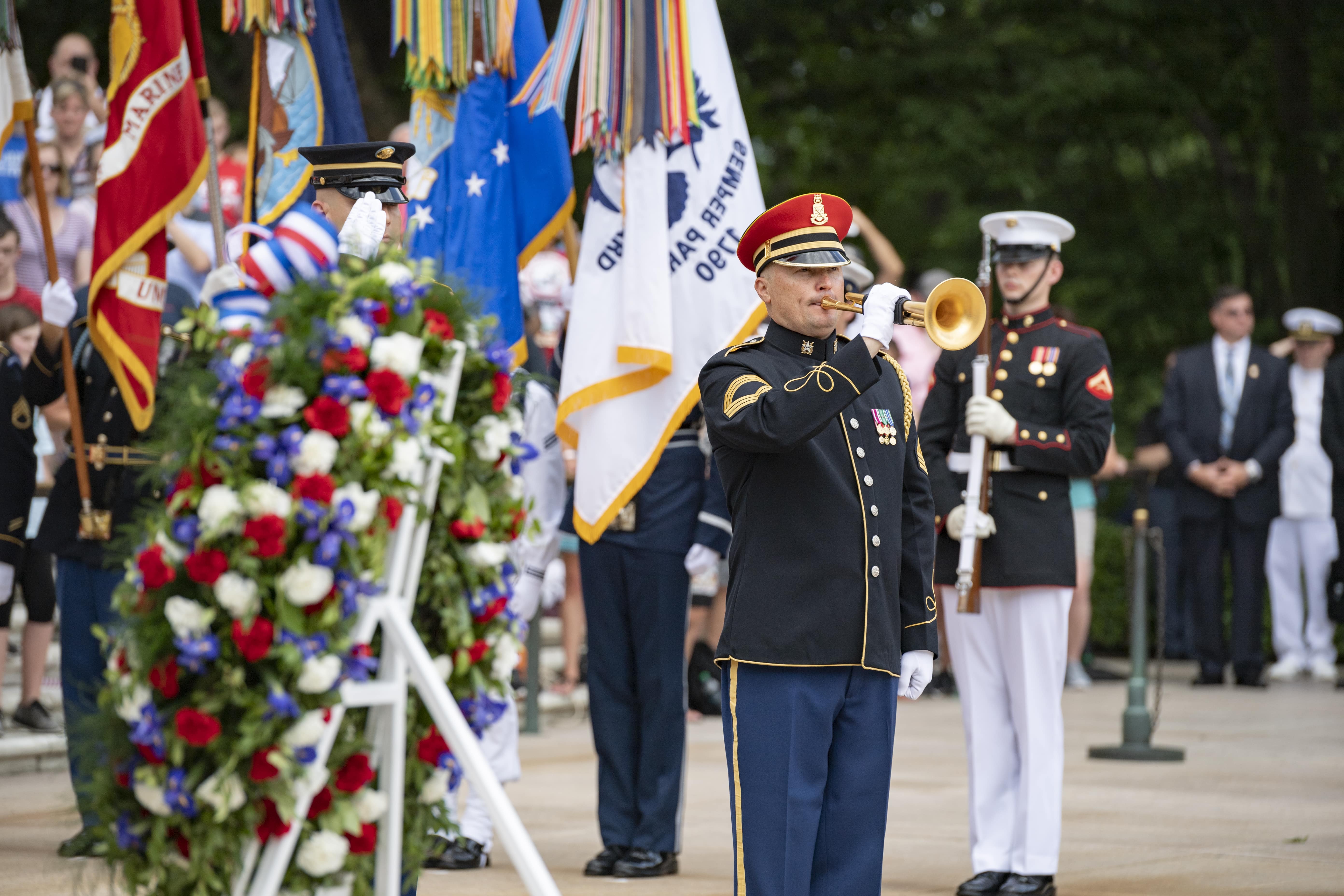
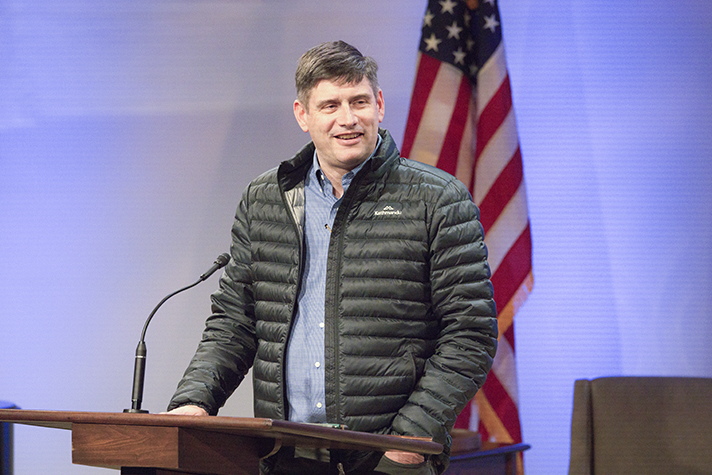
Will Graham (born 1975), an evangelist and grandson of Billy Graham, is the son of Franklin Graham and Jane Graham. Raised in Boone, North Carolina, he is the oldest of four children and followed his father into ministry, becoming the third generation of his family to serve with the Billy Graham Evangelistic Association.
He has published some thoughts about Memorial Day that caught my attention.
I want to share them with you on this Memorial Day, along with some of my own, both here and on the radio this morning.
Be informed.
Remember.
The Origins of Memorial Day
"Memorial Day," originally called "Decoration Day," had its origins on May 5, 1868, three years after the Civil War ended.
On May 31, 1864, Union and Confederate armies exchanged the first shots in the bloody two-week Battle of Cold Harbor that saw over 17,000 combatants killed, wounded, or captured. “I saw no live man lying on this ground. The wounded must have suffered horribly before death relieved them, lying there exposed to the blazing southern sun o’ days, and being eaten alive by beetles o’ nights,” wrote one Union Soldier after the battle concluded on June 12. Cold Harbor was one of a score of bloody battles that tore the United States apart during the Civil War.
All these years later, Americans bow their heads in silence to remember fallen Soldiers in a national day of mourning. Originally known as Decoration Day, this day of remembrance became Memorial Day in 1971 and is observed annually on the last Monday of May. While many Americans celebrate the day with barbeques and picnics, the original intent of the holiday, to honor fallen Soldiers, has a long history.
The Civil War ended in 1865; several hundred thousand troops died in the conflict. With so many deaths, nearly every family in America felt the grief of losing a loved one. The need for a space to grieve and collectively remember the devastation of the war gained national significance. The creation of the National Cemetery System in 1865 and the reburial of Soldiers’ remains kept the fallen at the forefront of the post-war mind.
The following year, in 1866, several other towns across the country held their own ceremonies and now claim to be the birthplace of Memorial Day. The New York Tribune reported on an event in Columbus, Mississippi, in which women placed flowers on the gravestones of both Union and Confederate soldiers from the Battle of Shiloh. Inspired by the news of honoring the fallen Soldiers from both sides, American poet Francis Miles Finch wrote one of his best-known poems, “The Blue and the Gray,” the following year. At nearly the same time in Carbondale, Illinois, over 200 Union veterans and civilians cleaned headstones at Woodlawn Cemetery. They organized a community-wide ceremony with Maj. Gen. John A. Logan of the Grand Army of the Republic, a Union veteran’s organization, delivered the leading speech. In May 1866, the town of Waterloo, New York, held its own celebrations attended by nearly the whole community, and included businesses closing in observance of the ceremony.
As Decoration Day grew in scale and importance, it gave rise to several symbols now associated with remembrance and Memorial Day. Two of the most famous are the red poppies and the bugle call known as “Taps.” During World War I, Col. John McCrae of Canada served in Flanders, Belgium, as a surgeon. He wrote a poem based on his experiences there, in particular the sight of rows upon rows of Soldiers’ graves covered in bright red flowers:
“In Flanders fields the poppies blow
Between the crosses, row on row,
That mark our place; and in the sky
The larks, still bravely singing, fly.
Scarce heard amid the guns below.
We are the dead. Short days ago
We lived, felt dawn, saw sunset glow
Loved, and were loved, and now we lie
In Flanders fields.”
The poem “In Flanders Fields” was published in a British magazine in 1915 and became popular in America as a symbol of the war to end slavery.
I donated and received my poppies yesterday at the door as I was leaving Safeway. I hope you'll donate as well.
Living a Life Worthy of Sacrifice By Will Graham:
The message of Memorial Day is one of sacrifice. On this day, we honor those who—throughout the history of our nation—paid the ultimate price to secure and defend our freedom. These were fathers and mothers, sons and daughters, who said goodbye to their families, never to return. It’s our honor to keep their memory alive.
In John 15:13, Jesus makes a simple, yet profound, statement: “Greater love has no one than this, than to lay down one’s life for his friends” (NKJV).
This verse often comes to mind when I think of the sacrifice of those who died in service to our nation. This is the ultimate gift—there’s nothing more a soldier can give. They’ve paid the price with their very breath and blood, all for you and me.
Of course, when Jesus said those words, He understood that He, too, would soon give His own life. In Mark 10:45, Jesus said, “For even the Son of Man did not come to be served, but to serve, and to give His life a ransom for many” (NKJV).
Our military members surrendered their lives to secure our freedom in this mortal realm, and Jesus gave His life—conquering sin and the grave—to offer us eternal freedom from the bondage of sin and the power of death.
1 Corinthians 15:55–57 reinforces this truth: “‘O Death, where is your sting? O Hades, where is your victory?’ The sting of death is sin, and the strength of sin is the law. But thanks be to God, who gives us the victory through our Lord Jesus Christ” (NKJV).
This Memorial Day, I invite you to take a moment to consider the incredible price that has been paid by so many for the freedom we have in the United States. Be grateful for those who gave all they had for you and for me. Honor those who have gone before.
At the same time, devote yourself to living for Christ, whose death and resurrection opened the door to salvation. As Paul writes in Romans 12:1, “Present your bodies a living sacrifice, holy, acceptable to God, which is your reasonable service” (NKJV).
Surrender everything to the one who paid the debt for you, cling to His promises, and live a life worthy of the sacrifices that have been made for us.
Takeaway
In the Bible, God views memorials as essential reminders of His faithfulness and deliverance. He commanded His people to establish physical stones, festivals, and offerings to ensure future generations would remember His miracles and instituted communion so believers would perpetually remember Jesus' sacrifice and soon return.
Take a moment and "remember" today.
Remember to build memorials so we can remember those who gave their lives for freedom, and most importantly, remember "Jesus paid it all...all to Him I owe."
Be Informed. Be Mindful. Be Thankful. Be Prayerful.
