
 Print
Print  PDF
PDF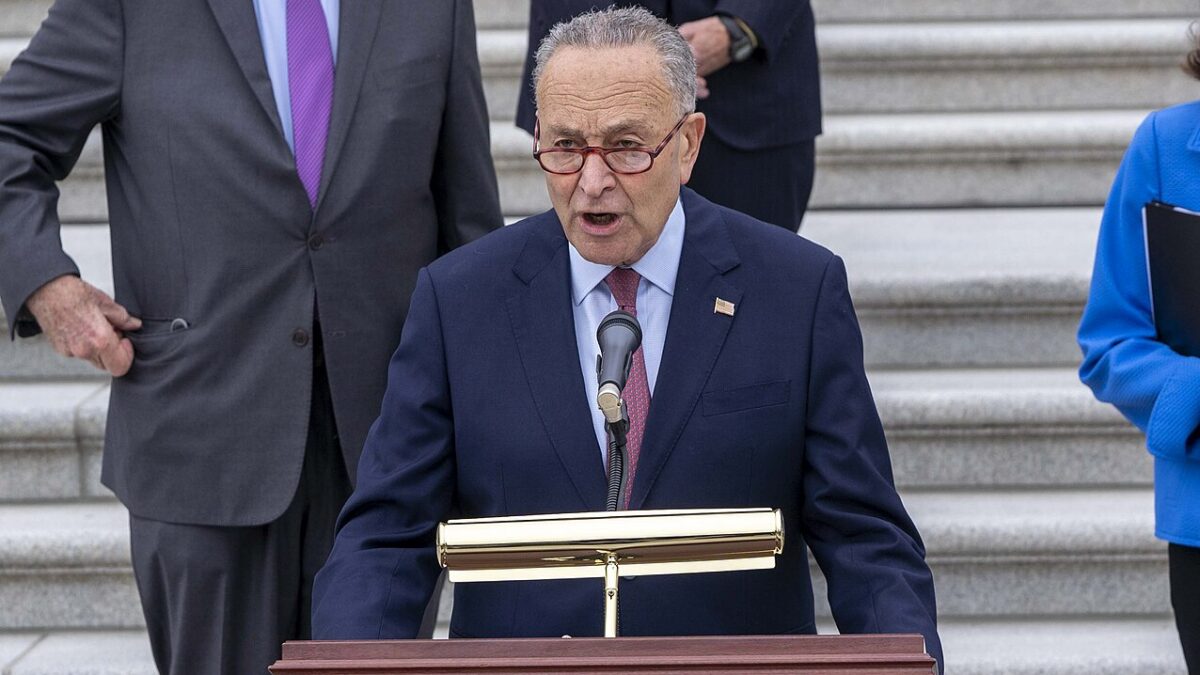
A new Gallup poll finds that more than a third of Democrats and nearly half of independents are worried about “people who are ineligible to vote casting ballots in U.S. elections.” Yet Senate Democrats (and a few RINOS) continue to block legislation to address those very concerns.
What's the matter with these people?
Be informed, not misled.
Election Concerns Run High Ahead of 2026 Midterms.
Two in three Americans are concerned about political leaders pressuring election officials to change election outcomes.
In their latest poll, Gallup is reporting that "Ahead of the 2026 midterms, Americans are concerned about election integrity and democratic processes. Their top concerns include political leaders pressuring election officials to change election outcomes (67% are concerned “a great deal” or “a fair amount”), ballots not being properly handled, counted, or secured (57%), and voter intimidation near polling places (52%)."
Gallup says, "Even issues that rank lower on the list remain concerns for substantial shares of Americans, including 40% saying they are concerned about being personally confronted, followed or recorded while voting.
Two in Three U.S. Adults Are Concerned About Political Pressure in Elections.
Two out of three!
Looking ahead to this year’s elections for Congress and state offices, how much, if at all, do each of the following concern you?

This bar chart shows the percentages of U.S. adults who say several election-related issues would concern them a great deal or a fair amount. The data were collected in 2026.
- Political leaders pressuring election officials to change election outcomes 67%.
- Ballots not being properly handled, counted or secured 57%.
- People gathering near polling places in an attempt to intimidate voters or discourage them from voting 52%.
- Your ballot not being counted 50%.
- Not having the information you need to make a well-informed decision about candidates or issues 48%.
- Being personally confronted, followed, or recorded while you are voting: 40%.
The Poll also found this:
Americans' concerns about the integrity of this year’s congressional and state elections are not limited to a single issue. Nearly three-quarters of Americans (73%) report at least a fair amount of concern about multiple aspects of the election process.
Americans express similar levels of concern across party lines about several aspects of the election process, including whether their ballot will be counted, whether they have enough information to make well-informed decisions about candidates and issues, and whether they may be confronted, followed, or recorded while voting.
However, Democrats are significantly more likely than Republicans to express concern about political leaders pressuring election officials to change election outcomes (77% vs. 56%, respectively) and about voter intimidation near polling places (60% vs. 46%).
Republicans, in contrast, are more likely than Democrats and independents to express concern about ballots being improperly handled, counted or secured. About two-thirds of Republicans (66%) report at least a fair amount of concern about this issue, compared with 52% of Democrats and 54% of independents.
These are the concerns that I have heard people in third-world countries express toward their fake elections.
The Federalist says, "It’s the same position Democrats took during their earlier push to federalize elections vis-à-vis H.R.1, which would have required states that do have voter ID laws to accept voters’ signed affidavits attesting under penalty of perjury that they are who they say they are, while the John Lewis Voting Rights Advancement Act would have required certain voter ID requirements get additional federal review. In other words, Democrats currently refusing to vote for the SAVE America Act have also previously targeted existing photo ID requirements, all while claiming they do not actually oppose voter ID."
The concerns that this poll raises only serve as more reason for the Senate to pass the Safeguard American Voter Eligibility (SAVE) America Act. The legislation would, in part, require documentary proof of citizenship to register to vote and photo ID to cast a ballot.
But after passing the House, the legislation has stalled in the Senate, where Democrats and some Republicans refuse to support it. Senate Minority Leader Chuck Schumer even declared the bill “dead on arrival” and branded it as Jim Crow despite widespread public concerns about election integrity issues that could be addressed by such legislation. But that opposition isn’t new.
When confronted, the Left and the few "RINOS" find it difficult to explain their position.
In fact, Sen. Mark Warner, D-Va., recently struggled to explain that position — that is, claiming to support voter ID but also opposing the SAVE America Act — during an ABC News interview. Warner indicated he supports voter ID in principle but would not support legislation that actually makes such a requirement law.
No wonder the Democrats are trying to discover their real selves--they don't know who they are or what they really believe. They simply want to be in power. And are willing to destroy our country to get it.
Takeaway
Why do people not do what is right even when they know the right thing to do?
According to the Bible, people often know what is right but still choose to do what is wrong because of the sinful nature inherited from the Fall of man.
When Adam and Eve disobeyed God in the Garden of Eden, sin entered the world and affected all humanity (Romans 5:12). Although God has given people a conscience and an understanding of right and wrong, the desires of the flesh often oppose His will.
The Apostle Paul describes this struggle in Romans 7:19: “For the good that I would I do not: but the evil which I would not, that I do.” This verse shows the conflict between the desire to obey God and the power of sin.
The conflict of right and wrong.
James 1:14–15 explains that people are tempted when they are drawn away by their own lust, and when lust is acted upon, it results in sin.
The Bible also teaches that the human heart is naturally inclined toward sin. In Jeremiah 17:9, the Bible says, “The heart is deceitful above all things, and desperately wicked.” As a result, people often choose their own desires over God's commands because of pride, selfishness, temptation, or unbelief.
And of their desire for power
However, Scripture also offers hope. Through faith in Jesus Christ, believers receive forgiveness and the power of the Holy Spirit to resist sin and live in obedience to God (Galatians 5:16).
The biblical view is that people fail to do what they know is right because of sin, but God provides grace, strength, and redemption through Christ, enabling believers to grow in righteousness and faithful obedience.
Be Informed. Be Discerning. Be Vigilant. Be Faithful. Be Engaged. Be Prayerful.
