
 Print
Print  PDF
PDF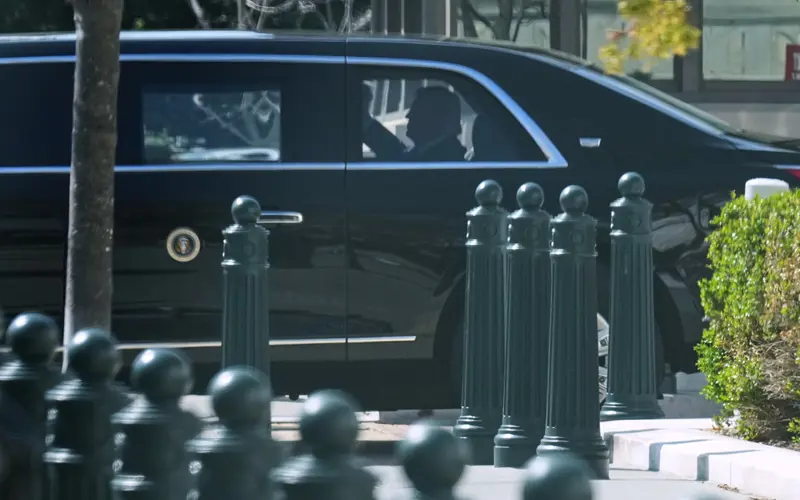
I was surprised that the Supreme Court is casting doubt on President Donald Trump’s restrictions on birthright citizenship in a consequential case that was magnified by Trump’s unparalleled presence in the courtroom.
Only Justice Clarence Thomas appeared to support the idea of closing the door on the outlandish abuse of the "Birthright Citizenship" industry in America.
Be informed, not misled.
Conservative and liberal justices on Wednesday questioned whether Trump's order declaring that children born to parents who are in the United States illegally or temporarily are not American citizens comports with either the Constitution or federal law.
Trump, the first sitting president to attend arguments at the nation’s highest court, spent just over an hour inside the courtroom for arguments made by the Republican administration's top Supreme Court lawyer, Solicitor General D. John Sauer. The president departed shortly after lawyer Cecillia Wang began her presentation in defense of broad birthright citizenship.
Trump heard Sauer face one skeptical question after another. Justices asked about the legal basis for the order and voiced more practical concerns.
American Family News says, "Justice Clarence Thomas sounded the most likely among the nine justices to side with Trump."
“How much of the debates around the 14th Amendment had anything to do with immigration?” Thomas asked, pointing out that the purpose of the amendment was to grant citizenship to black people, including freed slaves.
The justices are hearing Trump’s appeal of a lower-court ruling from New Hampshire that struck down the citizenship restrictions, one of several courts that have blocked them. They have not taken effect anywhere in the country.
Trump's order would upend the long-standing view that the Constitution’s 14th Amendment, ratified in 1868, and federal law since 1940 confer citizenship on everyone born on American soil, with narrow exceptions for the children of foreign diplomats and those born to a foreign occupying force.
The 14th Amendment was intended to ensure that black people, including former slaves, had citizenship, though the Citizenship Clause is written more broadly. “All persons born or naturalized in the United States, and subject to the jurisdiction thereof, are citizens of the United States and of the State wherein they reside,” it reads.
Both Trump and the American people disagree with the Court's apparent rejection of Trump's action on the matter.
Birthright citizenship grants immediate citizenship to a child born in the U.S., regardless of whether or not that child’s parents are illegal aliens – a practice banned by President Donald Trump in an executive order on his first day returning to the White House.
As NPR explains, the policy of granting birthright citizenship was created by European colonists as a way of becoming the majority over natives in countries they controlled:
“It has roots in colonialism, particularly in South America and Africa, when Western European countries needed more people for labor and to outnumber native populations in those places.
“Many African countries abandoned the practice after gaining independence.”
Other countries have followed suit in recent decades by abolishing birthright citizenship, including:
- Ireland
- The United Kingdom
- Australia
- New Zealand
- India
- Pakistan
Today, the U.S. is one of only 36 countries that still grant birthright citizenship to the children of illegal aliens.
NPR also notes the unpopularity of granting birthright citizenship to children born in the U.S. to illegal aliens (“undocumented immigrants”), as measured by a 2025 YouGov survey of U.S. adults.
Less than a third (31%) said that the children of those who are in the country illegally should be given birthright citizenship. Only children of foreign diplomats (30%) and tourists (25%) in the U.S. scored lower.
Even among Democratic citizens, barely half (53%) said children of illegal aliens should be deemed citizens, simply because they are born on U.S. soil. In contrast, just 29% of Independents and 13% of Republicans said they support this type of birthright citizenship.
Trump’s executive order, being challenged in the Supreme Court case Trump v. Barbara, bans birthright citizenship for persons born in the U.S. if the child’s father is not legally in the country.
A YouGov poll found 51% in favor and 39% opposed. But that dropped considerably for those not in the country legally.
However, just 31% said they were in favor of granting citizenship to babies of people who are "undocumented," as the survey put it, and only 25% for tourists visiting the U.S.
Takeaway
1. What does the Constitution say?
In the United States, birthright citizenship became part of the Constitution in 1868 as an effort to protect recently freed slaves.
It was enacted with the passage of the 14th Amendment. Section 1 of the amendment says:
"All persons born or naturalized in the United States, and subject to the jurisdiction thereof, are citizens of the United States and of the State wherein they reside."
Key question: What exactly does "subject to the jurisdiction thereof" mean?
2. Birthright babies have become a billion-dollar industry in the US.
Birth tourism—where foreign nationals travel to the US to give birth for citizenship—is a huge industry largely untracked, yet estimated to be tens of thousands of births annually.
Estimates suggest around 9,500 births to parents with non-US addresses, but informed critics of this abuse of America's generosity estimate up to 70,000 cases of "birth tourism," with some paying up to and more than a hundred thousand dollars in medical costs and accommodation.
In Los Angeles alone, the average cost per birthright baby is about $100,000 per birth. That usually includes services like accommodation, transportation, and medical care.
Operators frequently coach clients to fly into cities with easier screening (like Las Vegas or Hawaii) to avoid detection at Los Angeles International Airport (LAX).
The pregnant mother flies to the US, gives birth, then flies home with her new little American citizen.
And that baby citizen has all the rights of an American citizen, including education and immigration rights. A high number of these birthright mothers are from China.
I'm with President Trump and Justice Thomas on this one.
Be Informed. Be Discerning. Be Vigilant. Be Engaged. Be Bold. Be Prayerful.
